Crystal cleansing is an essential part of maintaining your crystal’s energy and vibrational frequency. Over time, crystals absorb surrounding energies, making regular cleansing an important practice for anyone who works with gemstones for meditation, healing, manifestation, or spiritual growth.
Many people automatically cleanse their crystals using water, salt, or saltwater, believing these methods are universally safe. While these cleansing techniques work well for some gemstones like Clear Quartz or Amethyst, they can permanently damage many other crystals.
Some crystals are soft, porous, water-soluble, or contain minerals that react negatively to moisture or salt. Using the wrong cleansing method can cause cracks, fading, scratches, or even complete dissolution.
In this guide, we’ll explain which crystals should never be cleansed with water or salt, why these methods are harmful, and the safest alternatives to keep your crystals energetically clean without causing physical damage.
Why Water and Salt Can Damage Certain Crystals
Before discussing individual crystals, it’s important to understand why water and salt can be harmful.
Water Damage
Some crystals naturally absorb moisture because of their porous structure. Others contain water within their mineral composition. Prolonged exposure to water may cause:
- Surface erosion
- Cracks and fractures
- Loss of polish
- Fading of colour
- Structural weakening
- Complete dissolution (for water-soluble minerals)
Salt Damage
Salt has long been used as an energetic purifier, but physically it’s abrasive.
Salt can:
- Scratch softer crystals
- Become trapped inside tiny cracks
- Leave mineral deposits
- Speed up deterioration
- Cause surface dullness
Even dry salt can damage delicate gemstones over time.
12 Crystals You Should Never Cleanse with Salt or Water
1. Selenite
Selenite is one of the softest crystals, measuring only 2 on the Mohs hardness scale.
Water causes its smooth surface to become rough and dull. Long exposure may permanently damage its delicate crystal structure.
Avoid:
- Running water
- Salt water
- Soaking
Best cleansing methods:
- Moonlight
- Sound cleansing
- Smoke cleansing
- Using a Clear Quartz cluster
2. Calcite
Calcite comes in many beautiful colours but is extremely sensitive to moisture.
Water can slowly dissolve Calcite, while salt scratches its polished surface.
Avoid:
- Water cleansing
- Salt bowls
- Saltwater baths
Safe alternatives
- Incense smoke
- Singing bowls
- Selenite charging plate
3. Malachite
Malachite contains copper minerals.
Water exposure can cause oxidation and may release tiny amounts of copper residue, making it unsuitable for prolonged soaking.
Because Malachite is also relatively soft, salt can easily scratch its polished finish.
Use instead
- Sound cleansing
- Moonlight
- Smoke cleansing
4. Angelite
Angelite is actually a form of anhydrite.
When exposed to water, it slowly converts back toward gypsum, permanently changing its appearance and texture.
Never soak Angelite or rinse it under running water.
5. Lepidolite
Lepidolite contains layers of mica that naturally flake.
Water weakens these layers and causes the crystal to become fragile over time.
Salt may also lodge between the thin sheets, causing damage.
6. Kyanite
Although Kyanite is famous because it naturally resists energetic negativity, it still requires occasional energetic refreshing.
Its crystal structure is prone to splitting and can weaken with prolonged water or salt exposure.
The good news?
Kyanite rarely needs cleansing because it naturally maintains its energetic vibration.
7. Opal
Opals naturally contain water within their internal structure.
Additional moisture, rapid drying, or exposure to salt may cause:
- Cracks
- Loss of brilliance
- Crazing
- Surface damage
Opals should always be handled gently.
8. Amber
Although commonly grouped with gemstones, Amber is actually fossilized tree resin.
Water and salt can:
- Dull the surface
- Make it brittle
- Reduce its natural shine
Use only a soft dry cloth for cleaning.
9. Turquoise
Turquoise is naturally porous.
Water can darken the stone and slowly weaken its structure.
Salt may permanently stain or scratch the surface.
10. Azurite
Azurite reacts poorly to prolonged moisture.
Water can slowly alter its chemical composition, reducing both its beauty and stability.
Avoid soaking or rinsing Azurite.
11. Halite
This one is obvious—but often overlooked.
Halite is literally rock salt.
Putting Halite into water causes it to dissolve almost immediately.
Always keep Halite completely dry.
12. Pyrite
Although Pyrite is relatively hard, moisture is still its enemy.
Water encourages oxidation, eventually leading to rust-like stains and deterioration.
Avoid:
- Water
- Saltwater
- Humid storage
Store Pyrite in a dry environment.
Safe Crystal Cleansing Methods
Fortunately, there are many effective ways to cleanse crystals without risking physical damage.
1. Moonlight Cleansing
Place your crystals under the light of the Full Moon overnight.
Moonlight is gentle and suitable for almost every crystal.
2. Smoke Cleansing
Pass your crystals through the smoke of:
- Sage
- Palo Santo
- Frankincense
- Sandalwood incense
This method clears stagnant energy while keeping delicate stones safe.
3. Sound Cleansing
Sound vibrations naturally clear energetic blockages.
You can use:
- Singing bowls
- Bells
- Tuning forks
- Chimes
- Mantras
Ideal for fragile crystals.
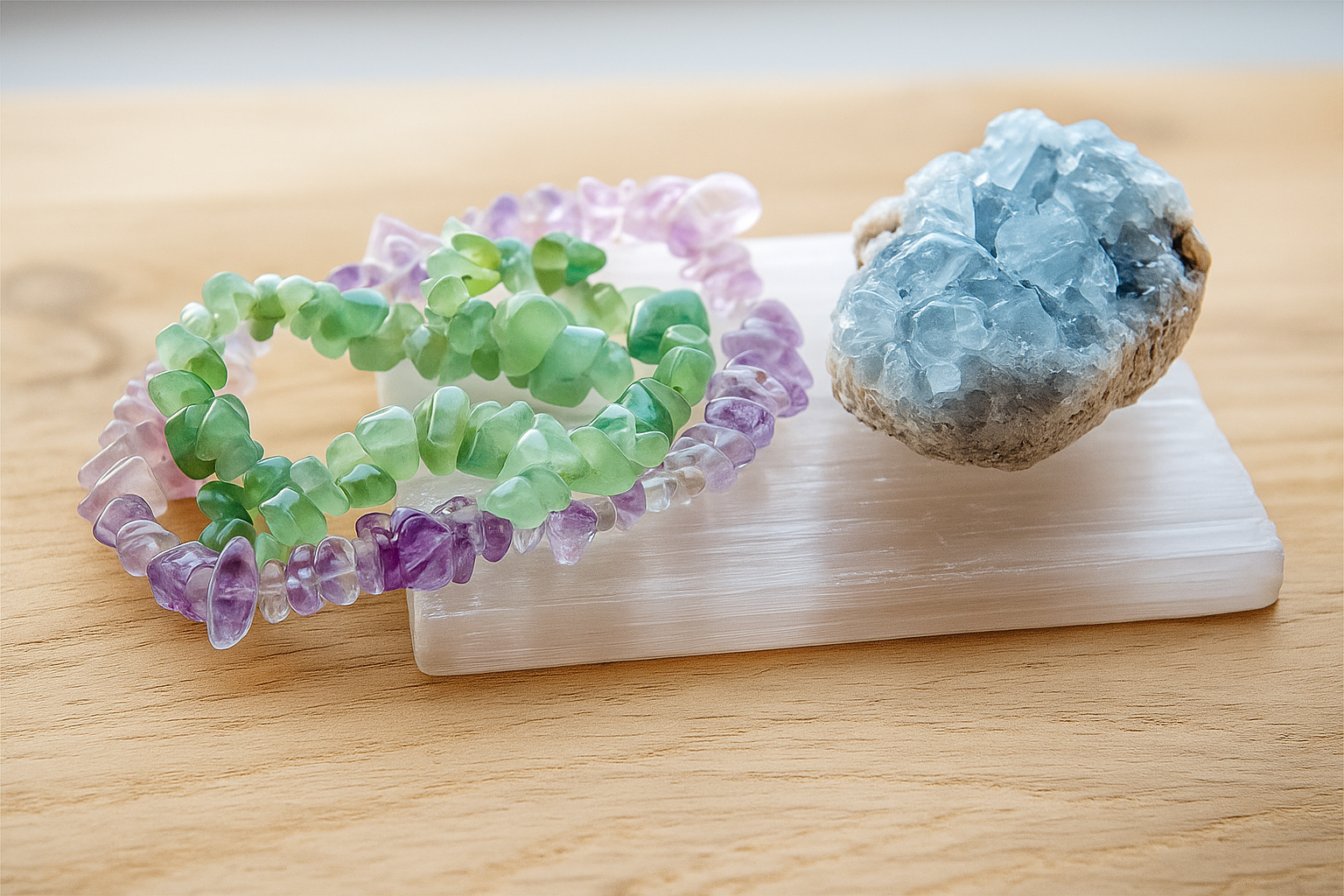
4. Selenite Charging Plate
Selenite naturally clears stagnant energy from other crystals.
Simply place your stones on a Selenite plate for several hours.
(Remember not to cleanse the Selenite itself with water.)
5. Clear Quartz Cluster
Clear Quartz amplifies and purifies surrounding energy.
Leaving crystals on a Quartz cluster overnight provides gentle energetic cleansing.
How Do You Know if a Crystal is Water Safe?
Before cleansing any crystal, consider three things:
✔ Mohs hardness below 5
✔ Porous structure
✔ Contains copper, salt, or water-sensitive minerals
If you’re unsure, always choose a dry cleansing method instead.
When in doubt, avoid water.
Frequently Asked Questions
Can all crystals be cleansed with water?
No. Many popular crystals—including Selenite, Malachite, Calcite, Lepidolite, Angelite, Amber, Turquoise, and Opal—can be permanently damaged by water.
Is salt safe for crystal cleansing?
Not always.
Salt can scratch soft crystals, leave residue, and weaken delicate minerals. It should only be used on crystals known to be physically durable.
Which cleansing method is safest for every crystal?
Moonlight, smoke cleansing, sound cleansing, and using a Clear Quartz cluster are among the safest methods for nearly all crystals.
Does Kyanite need cleansing?
Kyanite is widely believed to naturally resist absorbing negative energy, meaning it requires less frequent energetic cleansing than many other crystals. However, some practitioners still choose to refresh it occasionally using gentle methods like sound or moonlight.
Final Thoughts
While water and salt remain popular crystal cleansing methods, they are not suitable for every gemstone. Understanding the physical properties of your crystals helps preserve both their beauty and longevity.
When caring for delicate stones like Selenite, Malachite, Calcite, Lepidolite, Angelite, Amber, Opal, Turquoise, and Halite, it’s always safer to use gentle cleansing methods such as moonlight, smoke, sound, or a Clear Quartz cluster.
Treat your crystals with care, and they’ll continue supporting your spiritual journey for years to come.